
 VA 703-457-9028
 Apply for Financing

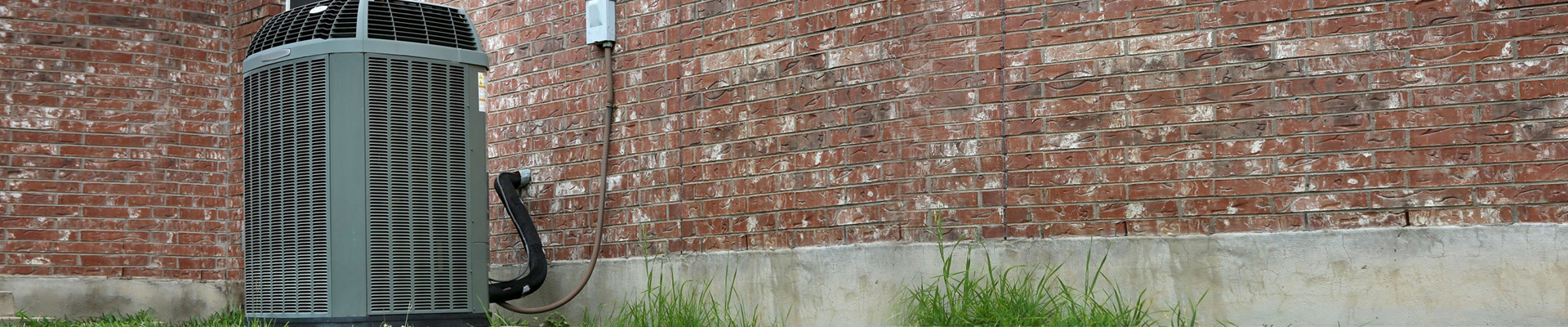
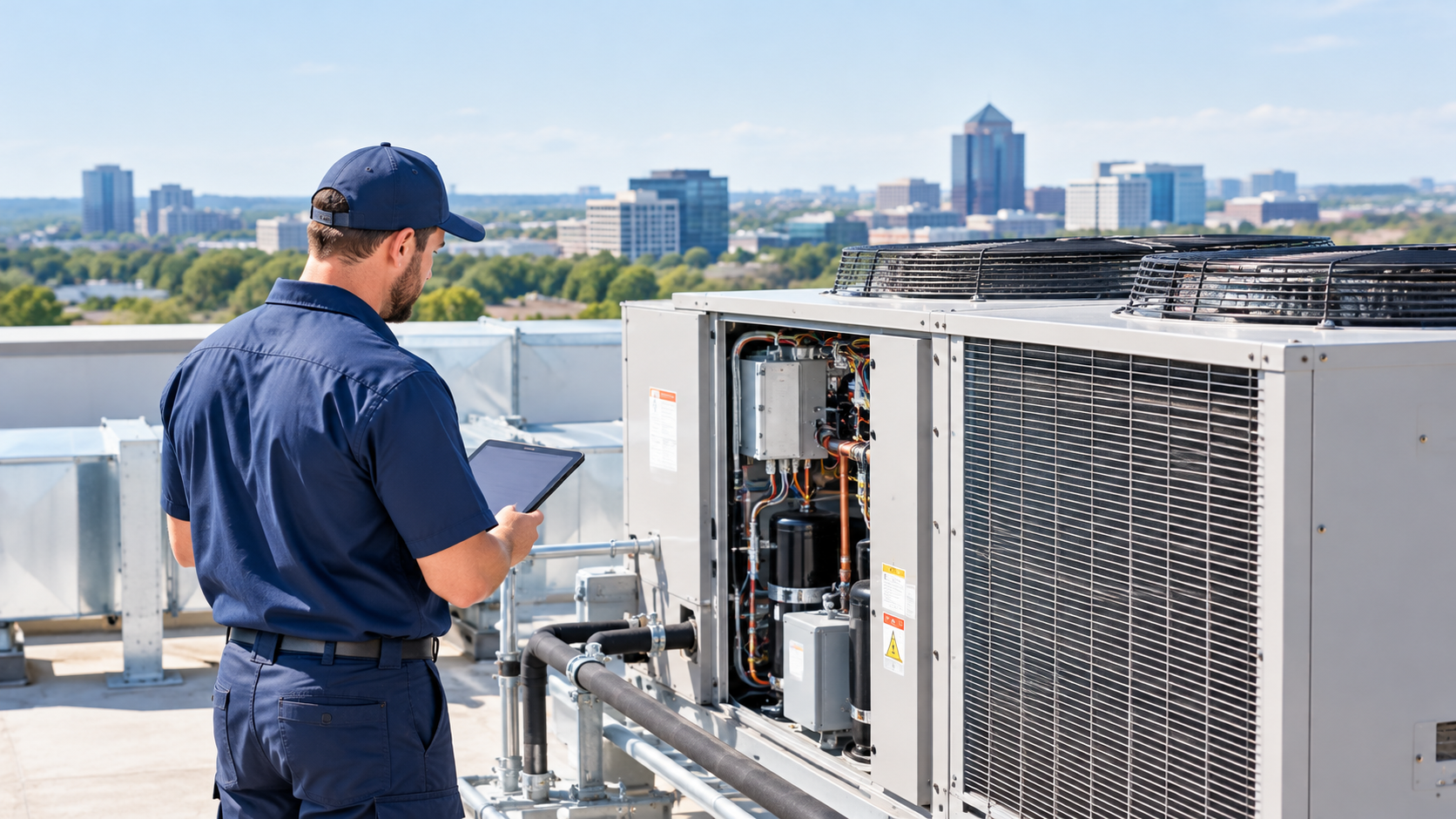
Commercial HVAC covers the rooftop units, split systems, commercial heat pumps and furnaces that heat and cool offices, stores, restaurants and other business buildings. For Northern Virginia owners the main decisions are which system fits the building, how often to service it, when to repair and when to replace, and which commercial HVAC contractor to trust. AVS handles commercial HVAC repair, installation, replacement and maintenance around the clock, with free written estimates and no overtime fees. Call Virginia 703-457-9028 or Maryland 301-686-7129.
Prices and statistics here come from the AVS site or the publications named in the text, and they are for budgeting, not a bid on your building. Written by the AVS Heating and Air Conditioning team. Virginia HVAC license 2705039269A, Maryland HVAC license 520714137895.
Commercial HVAC Systems: What Northern Virginia Businesses Use
Most light commercial buildings in the region run on a handful of equipment types. The right one depends on how many zones you need, how much roof or floor space you have and how the building is used.
| System | Where it fits | Worth knowing |
| Packaged rooftop unit (RTU) | Retail, offices, restaurants, warehouses | Sits on the roof and frees floor space. ASHRAE puts many rooftop systems at about 15 to 20 years (via Lennox) |
| Commercial split system | Smaller suites and individual areas | Outdoor unit plus an indoor air handler |
| Commercial heat pump | Buildings that want heating and cooling from one system | Replaces a separate furnace and AC |
| Commercial furnace | Heating-only replacement or packaged gas heat | Heating equipment that runs hard every winter loses efficiency over time |
AVS repairs, installs and replaces rooftop units, packaged systems, commercial split systems, commercial furnaces and heat pumps. For a deeper comparison of rooftop units, VRF and chilled-water systems in bigger buildings, read our guide to the best AC system for large buildings.
What Does Commercial HVAC Cost in Northern Virginia?
Commercial HVAC pricing depends on tonnage, building access and scope, so reliable numbers come from a site walk. AVS starts with a $90 site visit, a free written estimate and the price in writing before work begins. Maintenance for commercial buildings is priced per building and per system.
For budgeting a rooftop unit replacement, PickHVAC lists a packaged RTU at about $1,500 to $4,000 per ton installed (national figures). That puts a 10-ton unit at roughly $15,000 to $40,000 before extras.
| Cost item | Typical range | Source |
| AVS site visit | $90 | AVS commercial HVAC page |
| AVS written estimate | Free | AVS commercial HVAC page |
| Packaged RTU, installed | $1,500 to $4,000 per ton | PickHVAC (national) |
| Roof curb modification | $1,000 to $6,000 | PickHVAC (national) |
| Crane and permit costs | $2,000 to $8,000 | PickHVAC (national) |
| Commercial maintenance | Per building and per system, call for a quote | AVS |
Extras like a crane lift, a new curb or roof reinforcement can move a rooftop unit replacement well above the equipment price. Ask every bidder to list them.
Commercial HVAC Maintenance Schedule
A commercial HVAC maintenance schedule has four layers: daily checks, monthly filter work, seasonal tune-ups and at least two professional visits a year. Budget Heating’s business owner guide lays out the tiers, and the split between staff and licensed technicians is the part most owners miss.
| Frequency | Task | Who |
| Daily to weekly | Check space temperatures and thermostat settings, listen for alarms or unusual noise, log anything odd | Staff |
| Monthly to quarterly | Inspect filters and replace them based on occupancy and dust (about every 1 to 3 months), light cleaning | Staff or contractor |
| Seasonal | Verify control sequences and book professional tune-ups before the cooling and heating seasons | Contractor |
| Twice a year or more | Electrical, refrigerant, combustion and deep-cleaning tasks | Licensed technician |
AVS runs spring and fall inspections that cover coils, refrigerant levels, electrical connections, belts, drains and controls, so equipment is ready for each season. The cooling check belongs in spring and the heating check in fall, which matches the spring-and-fall timing ENERGY STAR recommends for heating and cooling systems.
What a Commercial HVAC Maintenance Contract Should Include
A good commercial HVAC maintenance contract names every unit, every visit and every response time. One DMV contractor guide lists what to look for:
- An equipment list with make, model, serial number and location
- Visits per year, with seasonal timing and the tasks done at each visit
- An emergency response time guarantee
- A clear scope and limited exclusions, especially for parts likely to fail
- A 30 to 60 day renewal notice and termination terms
- A cap on annual price increases (the guide cites 3 to 5 percent)
- Monthly or quarterly billing instead of a large upfront payment
Priority contract customers can expect emergency response in roughly two to four hours, while customers without a contract may wait 24 hours or more in peak season, according to that same guide.
Businesses can also join the AVS VIP Maintenance Plan, which pairs two yearly inspections with priority service, a 24-hour response time, a written report after each visit and up to 25% off repairs.
Commercial HVAC Repair vs Replacement
Replace when repairs approach half the cost of a new unit, parts are obsolete or the system is near the end of its life. AVS uses that same test on its commercial page: replacement makes sense when repairs exceed half the cost of a new unit, when parts are obsolete or when the age of the system is costing you every month in energy bills.
| Signal | What it points to |
| Repair quote above 50% of a new unit | Replace |
| System near 15 to 20 years (ASHRAE, via Lennox) | Start planning replacement |
| Repeat breakdowns on the same unit | Replace or upgrade |
| Parts hard to find | Replace |
| Rising energy bills with a clean filter | Ask for an efficiency check |
Example: if a replacement quote is $24,000, a repair above $12,000 points to replacing. Every AVS service call starts with a diagnosis and a written price, and if a repair does not make economic sense, we say so and quote the replacement side by side.
Lennox’s commercial guidance lists the same factors, equipment age, repair frequency and cost, safety and code, comfort complaints and efficiency goals, and recommends an on-site evaluation first. Read it at Lennox’s repair or replace guide.
Rooftop Unit Replacement: Cost Drivers and Timeline
Rooftop unit replacement costs more than the unit itself. Beyond tonnage, the quote moves with the curb, the crane, roof access and permits.
- Curb. A new or modified roof curb adds cost when the new unit does not match the old footprint.
- Crane. Rooftop height and unit weight decide whether a crane is needed.
- Permit. Fairfax County treats conversion, new, repair and replacement projects as trades permits, and strongly recommends that a licensed contractor pull them.
- Schedule. AVS installs commercial AC and heating around your operations, with no extra charge for nights and weekends.
Plan commercial HVAC replacement before the heat wave, not during it. A failed rooftop unit at 6 a.m. in July is the worst time to start shopping.
Energy Efficiency Upgrades for Commercial Buildings
Maintenance and controls deliver most of the savings. Rasmussen Mechanical reports that a dirty coil can raise energy use by 5 to 10 percent, that maintenance adds 5 to 20 percent in savings over the life of the equipment and that a variable frequency drive on a fan motor can save up to 40 percent of fan energy.
Practical upgrades to ask about:
- Coil and airflow cleaning as part of every visit
- Programmable or smart thermostats scheduled around occupancy
- Variable speed fan control where the unit supports it
- Replacing very old units with higher efficiency equipment
Newer equipment also brings a new manufacturer’s warranty, lower energy costs and quieter operation, as we explain on our commercial HVAC service page.
Emergency Service and Downtime Planning
Decide before a breakdown who you call and what you can protect. A short plan saves hours when a unit fails.
- Keep a list of every unit with its location, make and model
- Post the 24/7 service number where managers can find it
- Know the power and gas shutoffs for each rooftop unit
- Identify temperature-sensitive areas, such as server rooms and walk-in coolers
- Tell tenants or staff early, with an estimated fix time
AVS answers commercial calls 24/7, with nights, weekends and holidays at standard rates and no overtime fees. If walk-in coolers or kitchen equipment are part of the building, our commercial refrigeration service covers the refrigeration side as well.
How to Choose a Commercial HVAC Contractor in Northern Virginia
Pick a commercial HVAC contractor on licensing, documentation, response and a written price.
- Licenses. AVS holds Virginia HVAC license 2705039269A, Maryland HVAC license 520714137895 and Maryland Home Improvement license 4192876.
- Government and contract buyers. AVS is SAM registered (8UDV8) with CAGE code MVMMRTMDJ5P6.
- Paperwork. Every project comes with a written estimate and a detailed invoice. Tell us up front if your bid process needs more.
- Response. Ask for the emergency response time in writing, and whether after-hours work costs extra.
- Price. Get the estimate in writing before work starts and ask for the exact make and model of the equipment.
To start the conversation, contact AVS or see our full commercial HVAC installation, repair and replacement service page. Our other services are listed on the AVS Heating and Air Conditioning home page.
Financing for Commercial HVAC Projects
AVS offers Wells Fargo financing for qualified buyers, including zero-down plans and 0% APR for up to 18 months on select units, subject to lender approval. Ask for the current terms when you request your estimate.
Get a Commercial HVAC Estimate
Call AVS and we will walk your property, check the equipment and give you a written number before work starts.
Virginia: 703-457-9028. Maryland: 301-686-7129.
Sources: Lennox commercial repair or replace guide · Fairfax County commercial mechanical permits · Budget Heating, Rasmussen Mechanical, PickHVAC, CBS News and ACHR News as named in the text
Frequently Asked Questions About Commercial HVAC in Northern Virginia
Does the $5,000 rule apply to commercial HVAC?
Not directly. The $5,000 rule multiplies a system’s age by the repair cost, and CBS News says a result above $5,000 suggests replacement. It is framed for homeowners and is only a starting point. Commercial owners usually weigh the 50 percent rule, equipment age, repair history and life-cycle cost instead, and ask a contractor for a written comparison.
Is the 179D tax deduction still available for commercial HVAC?
Only for projects that began construction on or before June 30, 2026. ACHR News reports that the deduction ends for property whose construction begins after that date under Public Law 119-21, and that it requires a 25 percent energy reduction against the ASHRAE 90.1 reference building, measured across HVAC, lighting and the building envelope combined. Ask a tax professional whether a project qualifies.
Is a commercial HVAC maintenance contract worth it for a small business?
Often, because it moves work from emergency calls to scheduled visits. A contract gives you set inspections, a written record and, with many providers, priority response. One DMV contractor guide says contract customers can expect emergency response in two to four hours, against 24 hours or more without a contract in peak season. Compare scope, response terms and the cost per building before you sign.
Do I need a permit to replace a rooftop unit in Fairfax County?
Fairfax County’s commercial mechanical page says trades permits are required for conversion, new, repair or replacement projects. Owners may apply themselves, though the county strongly prefers a licensed contractor as the responsible party. The page does not address like-for-like swaps, so ask Land Development Services at 703-222-0801 and have your contractor confirm.
How many tons of cooling does my commercial building need?
Rasmussen Mechanical gives a rule of thumb of one ton per 300 to 350 square feet, and says correct sizing usually keeps the safety margin on peak load to 10 percent or less. Use that only as a starting point. Occupancy, equipment heat, windows and ventilation change the answer, so ask for a load calculation before you approve a replacement.
What is the difference between commercial and residential HVAC?
Scale and service. Commercial work centers on rooftop and packaged units sized in tons, often needing a crane and a roof curb, and it is permitted as a trades project in Fairfax County. Commercial buildings also depend on faster response, because a failed system affects tenants, customers and sales. AVS handles rooftop units, commercial split systems, commercial heat pumps and furnaces 24/7.
