
 VA 703-457-9028
 Apply for Financing
Last updated: October 2026
When your AC running but not cooling the house, the most common causes are a dirty air filter, the wrong thermostat setting or a dirty outdoor condenser coil, according to Carrier. If those check out, the problem is usually low refrigerant, a frozen coil, a failed part, leaky ducts or a system that’s the wrong size for your home.
Some of these you can fix in five minutes. Others need a technician. This guide shows you which is which.
AC still not cooling? AVS answers calls 24/7 across Northern Virginia and Maryland, with no extra charge for evenings, weekends or holidays. Call 703-457-9028 (VA) or 301-686-7129 (MD).
What’s your symptom? Find the likely cause fast
Start with what you’re noticing. Each symptom points to a short list of likely causes, numbered to match the sections below.
| What you notice | Most likely causes | Jump to |
|---|---|---|
| Warm air coming from the vents | Thermostat, tripped breaker, failed capacitor or compressor, low refrigerant | #1, #3, #6, #7 |
| Cool air from the vents, but the temperature isn’t dropping | Dirty filter or coil, leaky ducts, heat getting into the house, undersized system | #2, #4, #8, #9 |
| The house feels cool but sticky | Oversized system, refrigerant leak | #9, #6 |
| Some rooms are hot, others are fine | Blocked vents or returns, leaky ducts | #8 |
| Ice on the refrigerant lines or indoor unit | Frozen evaporator coil | #5 |
| The outdoor fan isn’t spinning | Failed capacitor or fan motor | #7 |
Start here: 3 checks you can do in 5 minutes
- Check the thermostat. Make sure it’s set to “cool,” the temperature is set below the current room temperature, and the fan is on “auto,” not “on.” With the fan on “on,” the blower keeps running even when the system isn’t cooling.
- Check the air filter. If it looks gray or clogged, replace it.
- Check the breaker. Find the breaker for the outdoor unit and reset it once if it’s tripped.
If the house still isn’t cooling after these three checks, turn the system off. Carrier warns that continuing to run an AC that isn’t cooling properly can turn a minor issue into a major component failure.
1. Thermostat settings or dead batteries
What you’ll notice: Air blowing at room temperature, or the AC shutting off before the house feels cool.
Why it happens: A thermostat set to “fan” or “heat,” a setting that’s been bumped up, or weak batteries can all stop the system from cooling. AVS technicians also see aging or miscalibrated thermostats that misread the indoor temperature and shut the system off too early.
What you can do: Confirm the mode, setting and fan position, and replace the batteries. If the display is blank or readings look wrong, the thermostat may need replacing.
2. Clogged air filter
What you’ll notice: Weak airflow from the vents and a system that runs longer than usual.
Why it happens: Carrier identifies a dirty air filter as a frequent cause of an air conditioner not cooling a house. A clogged filter restricts airflow across the indoor coil, so the system works harder while delivering less cool air.
What you can do: Replace the filter. AVS recommends checking and replacing filters every one to three months so this never becomes a service call.
3. Tripped breaker to the outdoor unit
What you’ll notice: The indoor fan runs, but the outdoor unit is silent and the air isn’t cold.
Why it happens: Your AC has two parts. If the circuit for the outdoor unit trips, the indoor blower keeps moving air, but nothing is removing the heat.
What you can do: Reset the breaker once. If it trips again, leave it off and call a technician, since repeated tripping points to an electrical fault.
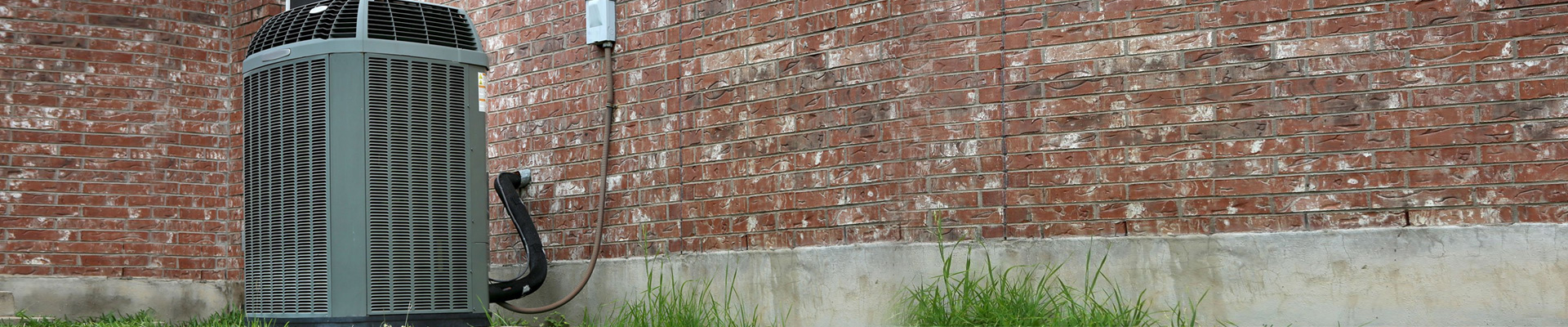
4. Dirty outdoor condenser coil
What you’ll notice: The outdoor unit runs, but the air inside never gets properly cold, especially on hot afternoons.
Why it happens: The outdoor coil releases the heat pulled out of your home. Trane notes that debris easily sticks to the inlet side of the coil, blocking that heat transfer.
What you can do: Turn off power to the unit, clear away leaves, grass clippings and debris, and gently rinse the fins with a garden hose.
5. Frozen or dirty evaporator coil
What you’ll notice: Ice on the copper lines or the indoor unit, weak airflow, or water around the indoor unit as ice melts.
Why it happens: The indoor coil absorbs heat from your air. Trane points out that ordinary house dust, pollen and soot can block it, and restricted airflow or low refrigerant can make it freeze. A frozen AC coil can’t absorb heat at all, so the house feels like the AC has stopped cooling even though it’s running.
What you can do: Turn the system off, let the coil thaw completely, then replace the filter. If it freezes again, the underlying cause needs a technician.
6. Low refrigerant or a leak
What you’ll notice: Air that’s cool but not cold, ice on the lines, or a hissing or bubbling sound.
Why it happens: Refrigerant carries heat out of your home. AC systems don’t use up refrigerant, so a low level almost always means a leak or an incorrect charge. Trane adds that a leak can also raise humidity levels in your home.
What you can do: Nothing yourself. Low refrigerant needs a certified technician to find and repair the leak and charge the system correctly.
7. Failed capacitor, fan motor or compressor
What you’ll notice: The indoor fan runs but the air isn’t cold, the outdoor fan isn’t spinning, or the outdoor unit hums without starting.
Why it happens: The capacitor gives the compressor and fan motors the jolt they need to start. AVS sees capacitor failure as one of the more frequent causes of poor cooling, particularly on units in service for eight years or more. When the outside AC unit stops working, a capacitor or fan motor is often the reason. On older systems, a worn compressor may still run but move far less heat than it once did.
What you can do: Call a technician. These are electrical and mechanical repairs, not DIY jobs.
Heat pump owners: If your system heats and cools, a stuck reversing valve can keep it in heating mode even when the thermostat is set to cool, as Pruett Air Conditioning notes. That also needs a technician.
8. Leaky ducts, blocked vents or heat getting into your home
What you’ll notice: Cool air at the vents, but some rooms stay hot or the thermostat reading barely moves.
Why it happens: Sometimes the AC is cooling fine, but the cool air never reaches you. Three things cause this:
- Blocked vents and returns. Paschal Air, Plumbing & Electric points out that covered return vents stop the system from pulling air back in to cool.
- Hot attics and leaky ducts. ConsumerAffairs notes that Fairfax attics can exceed 130 degrees in summer. Ducts running through an attic that hot lose cooling before the air reaches your rooms, and any leaks make it worse.
- Heat getting into the house. PV Heating, Cooling & Plumbing explains that if your AC blows cold air but the house won’t cool, heat may be entering through weak insulation and air leaks.
What you can do: Open vents, clear furniture and rugs away from returns, and close blinds on sun-facing windows. Duct leaks and insulation gaps need a professional inspection.
9. Wrong-size or aging system
What you’ll notice: The AC runs almost nonstop on hot days, or the house feels cool but clammy.
Why it happens: Size matters in both directions:
- Too small. Carrier explains that an undersized unit struggles to keep up as outdoor temperatures rise, so it runs constantly while the house stays warm.
- Too big. An oversized AC cools quickly but shuts off before it removes enough humidity, leaving your home feeling sticky, as Paschal describes. In humid Northern Virginia and Maryland summers, that clammy feeling is often the first clue.
- Too old. Pruett notes that age alone can be the issue once an AC passes 10 to 15 years.
What you can do: A technician can confirm whether your system is correctly sized for your home and how much life it has left.
What do these repairs cost?
Costs depend on which part has failed. For typical prices on common fixes like capacitors, refrigerant leaks and fan motors, see our guide to AC repair costs.
When to stop troubleshooting and call a technician
Call a technician if you notice any of these:
- Ice on the refrigerant lines or indoor unit that returns after thawing
- A breaker that trips a second time
- Hissing, bubbling or grinding sounds
- A burning smell from the indoor or outdoor unit
- The outdoor fan isn’t spinning
- The system turns on and off every few minutes
- No improvement after the three quick checks
Waiting rarely helps. AVS explains that a minor refrigerant leak left alone can eventually starve the compressor of the lubrication it needs, turning an inexpensive fix into a much more expensive repair.
AVS provides 24/7 AC repair across Northern Virginia and Maryland, with same-day service and no extra charge for evenings, weekends or holidays. Site visits start at $90.
How to keep it from happening again
- Check the air filter monthly during summer and replace it at least every one to three months.
- Keep at least two feet of space clear around the outdoor unit, as One Hour Heating & Air Conditioning recommends.
- Rinse leaves and dust off the outdoor unit with a hose now and then, as HVAC experts told Tom’s Guide.
Why Northern Virginia and Maryland homeowners call AVS
- Founded in 1991, with more than 50,000 residential and commercial customers served across the Washington DC metro area
- 24/7 service, 365 days a year, with no extra charge for evenings, weekends or holidays
- Licensed in Virginia (HVAC 2705039269A) and Maryland (HVAC 520714137895, Home Improvement 4192876)
- Call 703-457-9028 (VA) or 301-686-7129 (MD)
Frequently Asked Questions About AC running but not cooling
How long should it take an AC to cool a house?
A correctly sized central air conditioner typically cools a home by about 1 degree every 15 to 24 minutes, according to PickHVAC. That means dropping the temperature 10 degrees can take roughly 2.5 to 4 hours. If your home barely changes after a few hours on a normal day, something may be wrong.
Is it normal for my AC to struggle on very hot days?
Yes, to a point. Engineers and installers say most AC systems are designed to keep indoor temperatures about 20 degrees cooler than outside, and most new U.S. systems are designed for a 95-degree day, as NPR reported. On a 100-degree afternoon, an indoor temperature around 80 degrees can be normal.
Can I add refrigerant to my AC myself?
No. Refrigerant handling requires certification, and AVS warns that improper charging can damage the compressor. Low refrigerant also means there’s a leak, so topping it up without repairing the leak only delays the problem. A certified technician should find the leak, fix it and charge the system to the manufacturer’s specification.
Should I get a dehumidifier if my AC leaves the house sticky?
It can help. PV Heating, Cooling & Plumbing notes that if your AC is oversized and you don’t want to replace it yet, a whole-house dehumidifier can remove the humidity the AC can’t, even when the AC isn’t running. Have a technician confirm the cause before you buy one.
How often should an AC be serviced?
Once a year is the standard recommendation. HVAC experts interviewed by Tom’s Guide advise scheduling a professional check annually, preferably before the start of the cooling season. In Northern Virginia and Maryland, spring is the ideal time, before summer heat and humidity put the system under the most strain.
Does an AC that isn’t cooling need to be replaced?
Not usually. Most causes, like dirty filters, tripped breakers, failed capacitors and small leaks, are repairable. Replacement becomes worth considering when an older system needs a major repair, such as a worn compressor, and the cost of fixing it starts to approach the cost of new equipment.
