VA 703-457-9028
 Apply for Financing
There’s something every Bethesda homeowner knows well the moment summer humidity settles in and your air conditioner starts lagging, every decision about that system suddenly feels urgent. You start wondering whether cleaning those vents yourself was enough, or whether you should have called someone months ago. It’s a question worth answering honestly, because the line between what a homeowner can handle and what genuinely requires a trained technician isn’t always obvious and getting it wrong can cost you far more than the service call you were trying to avoid.
AC maintenance in Bethesda, MD isn’t a one-size-fits-all checklist. The climate here hot, sticky summers layered on top of cold winters puts real strain on HVAC systems year-round. Understanding what your system needs, and who should be doing it, is one of the most practical things you can do as a homeowner.
What Homeowners Can Realistically Handle on Their Own
Let’s be clear: there are legitimate tasks a handy homeowner can manage without professional help. These are surface-level, low-risk steps that contribute to overall system health when done consistently.
Filter Replacement
This is the single most impactful DIY task in AC maintenance. A clogged air filter restricts airflow, forces your system to work harder, and can lead to frozen evaporator coils or compressor stress over time. Most residential systems use 1-inch filters that should be replaced every 30 to 60 days during peak cooling season more frequently if you have pets or anyone in the home with allergies.
The filter slot is typically located at the return air grille or inside the air handler cabinet. Turn the system off, slide the old filter out, note the arrow direction indicating airflow, and insert the new filter accordingly. It takes three minutes and costs a few dollars. Skipping it can lead to repairs costing hundreds.
Keeping the Outdoor Unit Clear
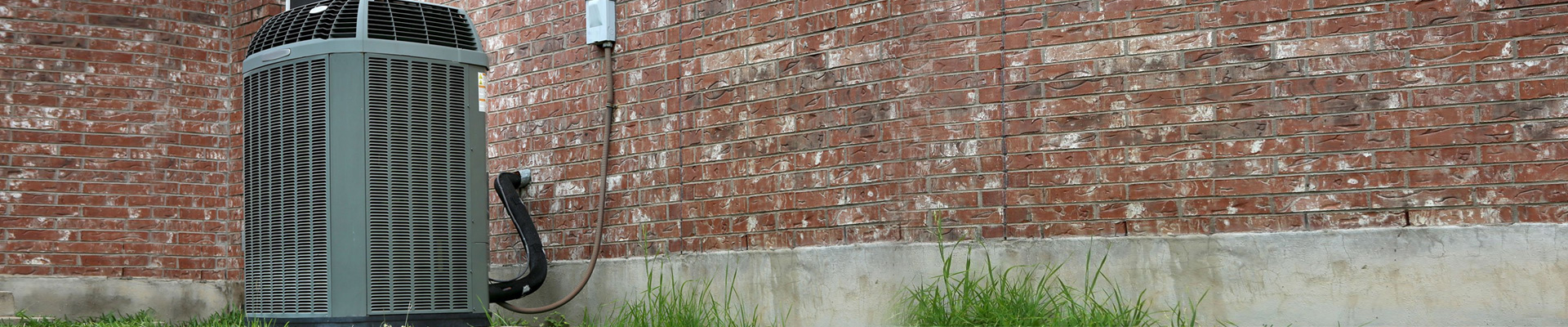
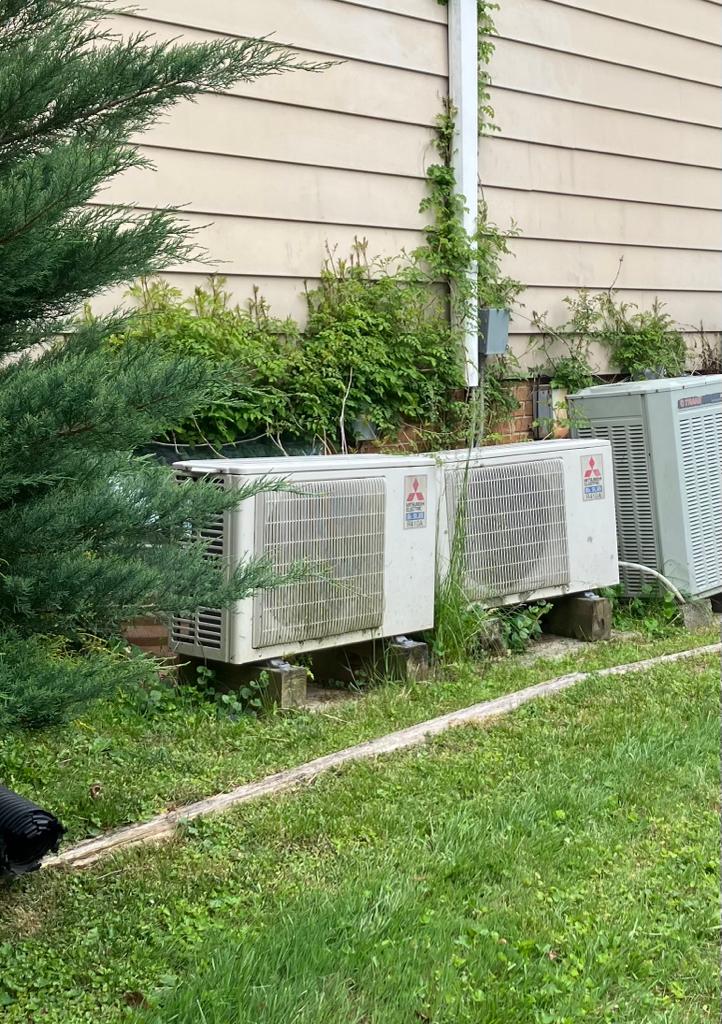
Your condenser unit the large box sitting outside needs clearance to reject heat effectively. Grass, weeds, shrubs, and debris that crowd the unit restrict airflow around the coils and reduce efficiency. Homeowners can trim vegetation back at least two feet on all sides, clear leaves and dirt from the top grille, and gently rinse the exterior fins with a garden hose (low pressure, from the inside out if possible) to remove buildup.
What you should not do is use a pressure washer on the fins they’re thin aluminum and bend easily. And if you notice the coils are caked with grime that a light rinse won’t clear, that’s a job for a technician with the right coil cleaner and tools.
Checking and Cleaning Condensate Drain Lines
Your air conditioner removes humidity from the air, and that moisture drains through a condensate line. Over time, algae and mold can clog this line, causing water to back up and potentially damage your system or your home. Homeowners can pour a cup of diluted white vinegar down the drain access port every few months to slow this buildup. If water is already backing up or the safety float switch has tripped your system off, call a professional the clog may be deeper in the line than a simple flush will reach.
Thermostat and Airflow Checks
Walk your home and make sure all supply and return vents are open and unobstructed. Blocked vents create pressure imbalances that stress the system. If your thermostat is running on batteries, replace them annually. And if you haven’t yet upgraded to a programmable or smart thermostat, it’s one of the better investments you can make for long-term energy savings.
Where DIY Ends and Professional AC Maintenance Begins
This is where things get important. There’s a category of AC maintenance tasks that look approachable on the surface but carry real risks either to the equipment, to your home, or to your safety when handled without proper training and licensing.
Refrigerant Inspection and Recharging
Refrigerant is the lifeblood of your cooling system. If your AC is blowing warm air or struggling to cool your home to setpoint, low refrigerant is often the culprit but it’s not something a homeowner should attempt to address. Refrigerant handling in the U.S. requires EPA Section 608 certification. Beyond the legal requirement, improper handling can cause injury, damage the compressor, and result in refrigerant leaks that are far more expensive to fix than the original service call.
During a professional AC maintenance visit, a certified technician checks refrigerant levels and, if there’s a shortage, investigates the source. A low charge is almost always the result of a leak somewhere in the system and simply adding refrigerant without finding and sealing that leak is a temporary patch, not a solution.
Electrical Component Inspection
Capacitors, contactors, disconnect boxes, and wiring inside the air handler and condenser unit carry significant voltage even after the power has been switched off at the thermostat. A failed capacitor is one of the most common reasons an AC stops working in summer, but opening the electrical panel of a condenser unit without training is genuinely dangerous. Professional technicians test capacitor readings with a multimeter, check contactor condition, and verify that electrical connections are tight and corrosion-free.
Evaporator Coil Cleaning
The evaporator coil sits inside your air handler and is responsible for absorbing heat from the air passing over it. Over time, it collects dust, mold, and debris even with a clean filter in place. A dirty evaporator coil dramatically reduces cooling efficiency and can cause the coil to freeze solid. Accessing and properly cleaning this component requires disassembly of the air handler, appropriate coil cleaning chemicals, and knowledge of how to rinse and restore the coil without damaging it or introducing moisture where it shouldn’t be. This is squarely in professional territory.
Ductwork Inspection
Leaky ducts are responsible for significant energy loss in many homes. Conditioned air escaping into attics, crawl spaces, and wall cavities means your system runs longer to reach setpoint driving up your energy bills and wearing the equipment down faster. A trained HVAC technician can perform a duct leakage assessment and seal problem areas. Homeowners can visually inspect accessible ductwork for obvious disconnections or tears, but diagnosing and sealing hidden leaks requires pressure testing equipment and professional judgment.
How Often Should You Schedule Professional AC Maintenance in Bethesda, MD?
The standard recommendation and the one we stand behind after years of serving homes throughout Montgomery County is once per year, ideally in spring before the cooling season begins. AC maintenance in Bethesda, MD during April or May gives your system a clean bill of health before the demands of summer hit. If your system also handles heating, scheduling a separate tune-up in the fall before heating season makes sense as well.
What a Professional AC Maintenance Tune-Up Actually Covers
A thorough seasonal tune-up from a licensed HVAC technician goes well beyond what any homeowner can replicate on a Saturday afternoon. It typically includes a refrigerant level check, electrical connection inspection and tightening, capacitor and contactor testing, evaporator and condenser coil cleaning, blower motor and belt inspection, thermostat calibration verification, condensate drain clearing, and a full system performance test. These aren’t upsells they’re the interconnected checks that keep a system running efficiently and prevent the kind of mid-summer breakdowns that leave families scrambling for emergency service.
The Real Cost of Skipping Professional Maintenance
A common reason homeowners in Bethesda skip annual AC maintenance is cost avoidance. It’s understandable. But the math rarely works out in favor of skipping it. A neglected system loses efficiency gradually often 5% or more per year without proper upkeep. Over a few seasons, that shows up on your energy bills. More significantly, deferred maintenance allows small issues to grow into expensive ones. A refrigerant leak caught during a tune-up is a repair. Left unaddressed, it can become a compressor replacement a cost that’s typically ten times higher.
The systems that last 15 to 20 years are almost always the ones that received consistent professional attention. The ones that fail at 8 or 10 years typically didn’t.
Keeping Your Home Comfortable All Summer Long
At AVS Heating and Air Conditioning, we’ve been serving homeowners across Northern Virginia and Maryland for over 30 years including families throughout Bethesda, Potomac, Rockville, and the surrounding Montgomery County communities. Our licensed technicians handle everything from seasonal AC maintenance tune-ups to full system replacements, and we work on all major brands including Trane, Rheem, Bryant, Lennox, and York. If your air conditioner hasn’t had a professional inspection this season, or if you’ve noticed anything reduced airflow, warm air, unusual cycling, higher-than-normal energy bills don’t wait for a breakdown to act. Scheduling AC maintenance in Bethesda, MD with our team is straightforward, and our VIP Maintenance Program makes it easy to stay ahead of issues with planned service visits throughout the year. Call us at 301-686-7129 to schedule your appointment, and let’s make sure your system is ready for whatever the Maryland summer brings.